


Many people feel nervous before a presentation, interview, first meeting, or social event. That is normal. Social anxiety is different.
Understand What Depression Really Means
What Social Anxiety Can Feel Like
Social anxiety often involves both emotional and physical symptoms.
- Fear of being judged, criticised, or embarrassed
- Worrying for days before a social event
- Intense fear of saying something wrong
- Avoiding situations where attention may be on you
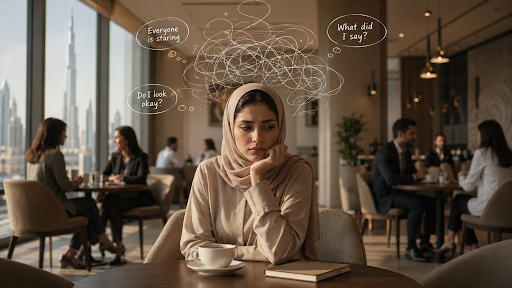
- Overthinking conversations before and after they happen
- Avoiding meetings, presentations, or social gatherings
- Struggling with friendships, dating, or professional networking
- Blushing, sweating, trembling, or feeling nauseous
- Palpitations or a racing heartbeat in social situations
- Difficulty speaking in groups
- Fear of eating, writing, or speaking in front of others
- Feeling watched or evaluated
- Feeling drained after interactions due to constant self-monitoring
- Harsh self-criticism after social contact
Some people describe social anxiety as living with an “inner audience” constantly watching and scoring them.




Why Social Anxiety Can Be Especially Difficult in Dubai
Dubai is a highly social, professional, and multicultural city. Networking, presentations, client meetings, social gatherings, community events, and workplace interactions can all be part of daily life.
For someone with social anxiety, this can feel exhausting.
- Speaking in meetings
- Networking with colleagues or clients
- Being misunderstood because of accent or language
- Entering new social groups
- Meeting people from different cultures
- Dating or relationship conversations
- Being visible online or professionally
- Making mistakes in public
Social Anxiety, Introversion and Shyness: What Is the Difference?
Because all three can involve some level of social discomfort, people often mislabel themselves. However, social anxiety, introversion, and shyness are not the same.
Introversion
Introversion is a natural temperament, not a disorder.
Introverted people often prefer meaningful conversations to small talk. They may enjoy quiet environments, value depth in relationships, think before speaking, and feel recharged by time alone rather than by crowds.
An introverted person may skip a party because they need rest, not because they are afraid of being judged. Introverts can be confident, socially skilled, and expressive. They simply manage their energy differently.
In simple terms:
Introversion says: “I prefer quiet, depth, and time to recharge.”
It is about preference, not fear.
Shyness
Shyness is usually a mild, situational discomfort around unfamiliar people or new environments. A shy person may feel awkward initially, blush, feel self-conscious, or worry about first impressions.
However, shyness often fades as the person warms up to the environment. Once they feel comfortable, they are usually able to participate and function well.
In simple terms:
Shyness says: “I feel awkward at first, but I warm up.”
Social Anxiety
Social anxiety is more persistent and distressing. It involves a strong fear of judgment that can affect work, relationships, friendships, studies, dating, and daily life.
In simple terms:
Social anxiety says: “I fear judgment and may avoid social situations because of that fear.”
Can People Have More Than One Combination?
Yes. A person can be introverted and socially anxious. Someone can be shy and introverted. A person can be shy without being introverted. Another person may be socially anxious but still deeply crave social connection.
This is why understanding the difference matters.
Social Anxiety and Avoidance
Avoidance is one of the main ways social anxiety continues.
When you avoid a situation, you may feel relief in the short term. But over time, avoidance teaches the brain that the situation was dangerous and should be avoided again.
This can create a cycle:
- A social situation appears
- Anxiety increases
- You avoid, escape, or stay silent
- Relief follows
- The fear becomes stronger next time
Social Anxiety Is Not a Character Flaw
Many people with social anxiety are thoughtful, sensitive, observant, and emotionally aware. The problem is not a lack of intelligence or ability. The problem is that the nervous system has learned to treat social evaluation as a threat.
- Past criticism or humiliation
- Bullying
- Family dynamics
- Perfectionism
- Low self-esteem
- Cultural or language adjustment
- High-pressure work environments
- Previous rejection
When Should You Seek Help?
Individual therapy may help when social situations cause intense fear, avoidance, or emotional exhaustion.
- You feel judged even when others reassure you
- You avoid meetings, presentations, gatherings, or conversations
- Your work, relationships, studies, or daily life are affected
- You feel exhausted from constant self-monitoring
- You replay conversations long after they are over
- You want connection but fear being seen, rejected, or criticised
- You feel stuck in cycles of avoidance and self-criticism
How Therapy Helps Social Anxiety
Therapy for social anxiety often includes a combination of understanding, practical skill-building, and gradual behavioural change.
- “Everyone will think I am awkward.”
- “If I make one mistake, I will embarrass myself.”
- “People are judging everything I say.”
Acceptance and Commitment Therapy (ACT) can help you make room for discomfort while still moving toward meaningful actions.
Therapy may also focus on:
- Understanding your social anxiety patterns
- Building confidence gradually
- Learning skills to feel safer and more grounded in social interactions
- Reducing constant self-monitoring
- Practicing self-compassion
- Improving communication skills
- Managing emotional and physical symptoms
- Reducing perfectionism
- Understanding cultural or relational triggers
Small Steps That Can Help
If social anxiety feels familiar, start gently.
- Speaking once in a small meeting
- Sending a message instead of avoiding contact
- Staying at a social event for 20 minutes
- Practicing a short conversation
- Not replaying an interaction for more than five minutes
- Asking yourself, “What evidence do I have that I was judged?”
- Reminding yourself, “Discomfort does not mean danger.”
The goal is not to eliminate all anxiety. The goal is to stop anxiety from making your decisions for you.
Final Thoughts
Social anxiety can make life feel smaller than it needs to be. But it is treatable.
Whether you are introverted, shy, socially anxious, or a combination of these, understanding your pattern is the first step toward responding to yourself with more compassion.
With the right support, you can learn to relate differently to fear, reduce avoidance, and build confidence in social and professional situations.
If social anxiety is affecting your life in Dubai or the UAE, therapy can offer a confidential space to understand the pattern and begin changing it.