

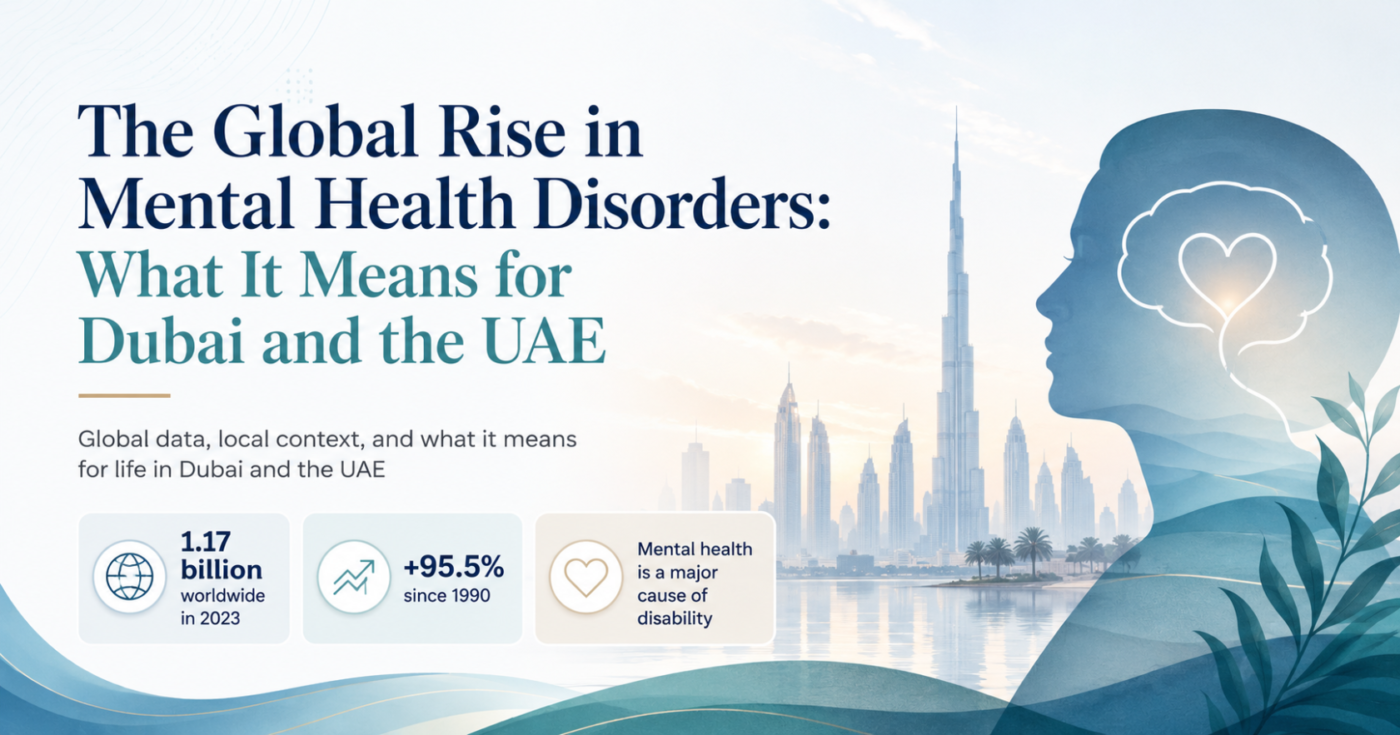
Why are mental health disorders rising worldwide?
Anxiety is not just something that affects those who are “overwhelmed” or “unable to cope.” In fact, some of the most driven, high-achieving individuals experience persistent, high-functioning anxiety —and often hide it well.
Understand What Depression Really Means
- High-pressure careers
- Relocation stress
- Loneliness away from family
- Financial expectations
- Relationship strain
- Cultural adjustment
- Burnout
- Anxiety and depression that often remain hidden




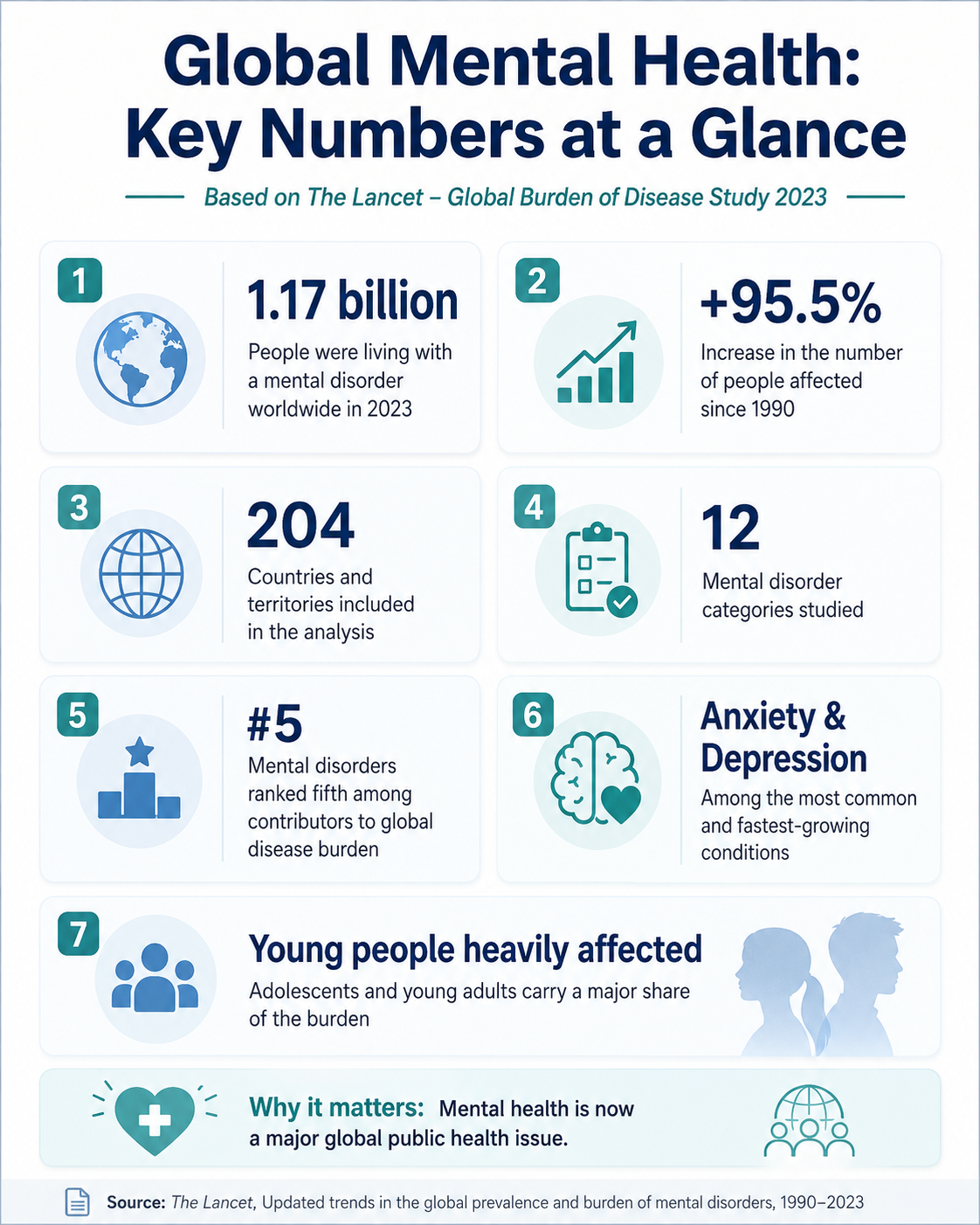
Key global mental health statistics from the Lancet study
Important data points
| Data Point | What It Means |
|---|---|
| 1.17 billion people | Estimated number of people living with a mental disorder globally in 2023. |
| 95.5% increase since 1990 | The number of people affected has almost doubled. |
| 204 countries and territories | Scope of the analysis. |
| 12 mental disorder categories | Broad clinical view of global mental health. |
| Mental disorders ranked fifth | Among major contributors to global disease burden. |
| Anxiety and depression | Among the most common and fastest-growing conditions. |
| Young people heavily affected | Adolescents and young adults now carry a major share of the burden. |
What are the most common mental health concerns globally?
The study highlights a broad range of mental health conditions, but anxiety and depression remain especially important because they are common, often underreported, and can affect people who appear outwardly successful.
- Anxiety disorders
- Major depressive disorder
- Persistent low mood
- Burnout and chronic stress
- Eating disorders
- ADHD
- Autism spectrum-related challenges
- Bipolar disorder
- Trauma-related symptoms
- Relationship and family-related distress
Why anxiety and depression are rising
Anxiety and depression often develop gradually.
Many people do not notice the early signs because they continue to function. They go to work. They meet deadlines. They take care of families. They socialise when required.
But internally, they may be struggling.
Common signs of anxiety
- Constant overthinking
- Feeling tense or restless
- Difficulty sleeping
- Panic-like symptoms
- Irritability
- Racing thoughts
- Fear of failure
- Difficulty relaxing
- Physical symptoms such as chest tightness, stomach discomfort, or headaches
Common signs of anxiety
- Low mood
- Loss of interest
- Fatigue
- Reduced motivation
- Difficulty concentrating
- Feeling emotionally numb
- Sleep or appetite changes
- Negative self-talk
- Withdrawal from people
- Feeling hopeless or stuck
Why this matters for Dubai and the UAE
Dubai is a high-performance, multicultural, fast-moving city. For many people, it offers opportunity, ambition, growth, and lifestyle.
But the same environment can also create psychological pressure.
In the UAE, mental health awareness has been increasing. The UAE introduced a National Policy for the Promotion of Mental Health in 2017 to strengthen mental health services, prevention, awareness, rehabilitation, and access to care.
The UAE also issued Federal Law No. 10 of 2023 concerning Mental Health, which aims to regulate mental healthcare and protect the rights, dignity, confidentiality, and treatment access of psychiatric patients.
This shows important progress.
But awareness does not automatically remove stigma. And legal frameworks do not automatically make people comfortable asking for help.
That is where early psychological support becomes important.
When should someone consider seeing a psychologist?
You do not need to wait for a crisis.
Consider speaking with a psychologist if you notice:
- Anxiety that affects sleep, work, or relationships
- Low mood lasting more than two weeks
- Panic symptoms
- Burnout or emotional exhaustion
- Relationship conflict that keeps repeating
- Difficulty coping with relocation or life changes
- Grief, trauma, or unresolved emotional pain
- Teen behavioural or emotional changes
- Feeling stuck despite trying to manage alone
What can therapy help with?
A psychologist can help you understand what is happening beneath the symptoms.
- Anxiety management
- Depression support
- Burnout recovery
- Stress regulation
- Relationship difficulties
- Parenting challenges
- Expat adjustment
- Trauma processing
- Self-esteem issues
- Emotional regulation
- Work-life boundaries
- Personal growth
Why early support matters
Many people wait too long before seeking help.
- “It is not serious enough.”
- “Other people have it worse.”
- “I should be able to handle this.”
- “I do not have time.”
- “It will pass.”
Sometimes it does pass.
But when symptoms continue, worsen, or begin affecting daily life, early support can prevent deeper distress.
The Lancet study makes one thing clear: mental health concerns are widespread, rising, and linked to real disability.
Mental health in Dubai: a practical takeaway
Dubai is a city of ambition, movement, and opportunity.
But ambition needs emotional support. Success needs recovery. Families need communication. Young people need psychological safety. Professionals need boundaries. Expats need belonging.
The global rise in mental health disorders is not just a statistic. It reflects what many people quietly experience every day.
If you are struggling with anxiety, stress, low mood, burnout, relationship strain, or adjustment difficulties, speaking to a psychologist can be a practical first step.
You do not have to wait until things fall apart.